
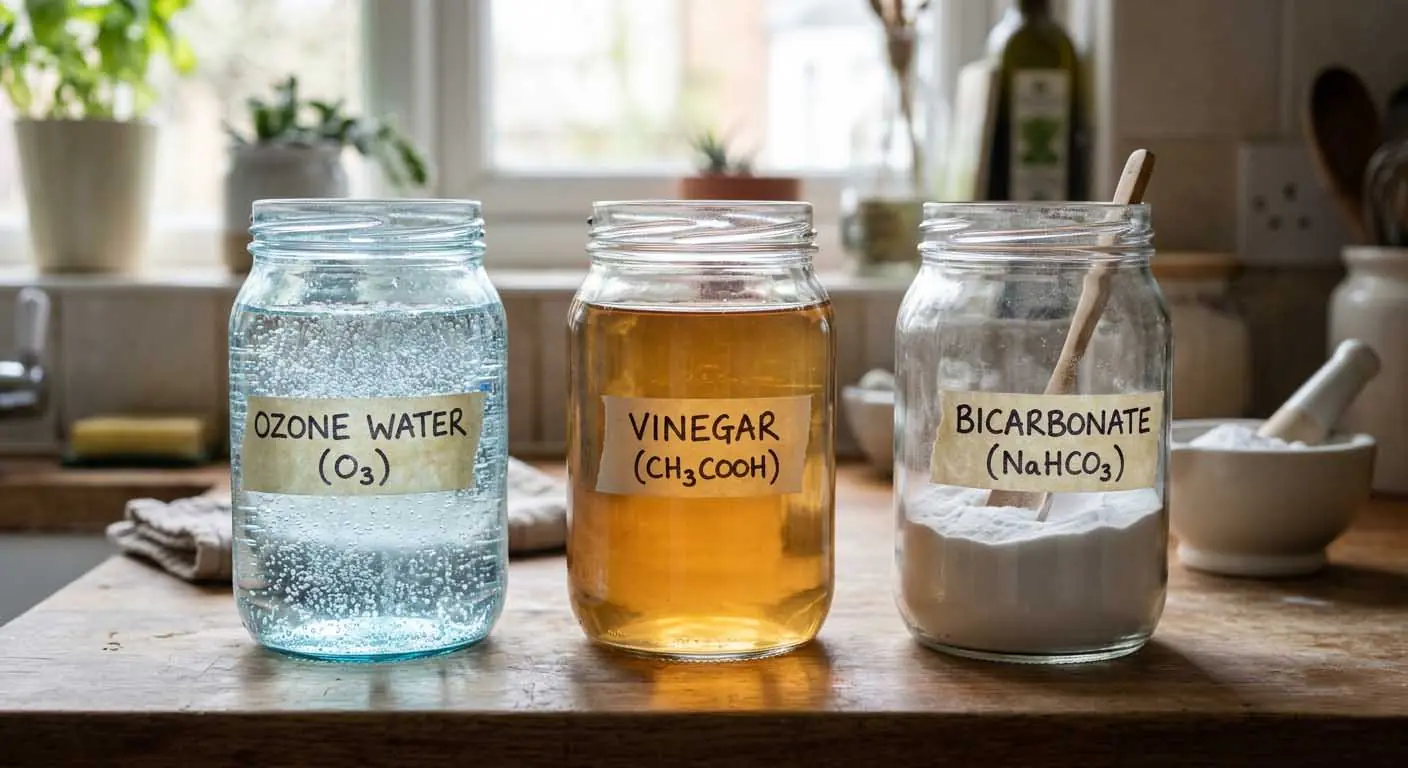
What is ozone water?
Ozone water is activated water that breaks down dirt and odors through oxidation, then naturally converts back to oxygen—delivering powerful cleaning with zero chemical residue.
What is vinegar?
Vinegar is a natural household ingredient commonly used for its effective descaling ability.
Downsides: It has a strong odor and can damage certain surfaces.
What is bicarbonate?
Bicarbonate (baking soda) is a mild alkaline powder that acts as a gentle abrasive and odor neutralizer.
Downsides: Leaves a white powdery residue if not rinsed thoroughly; not for use on aluminum.
Use cases compared
Cleaner | Mechanism / Effectiveness | Household Use | Agricultural Use | Farm Use |
Vinegar | Acetic acid dissolves mineral salts, prevents scale | Kettles, showerheads, taps | Irrigation lines, water tanks | Livestock drinkers, water troughs |
Ozone water | Strong oxidizer, kills bacteria, removes biofilms | Tables, floors, sinks | Irrigation systems, greenhouse benches, processing tools, drinking water, and sanitation | Barn floors, equipment, tools, barn sanitation |
Bicarbonate | Mild alkaline, reacts with acids/grease, loosens organic residues | Ovens, sinks, stovetops | Storage containers, soil-contact surfaces | Farm equipment, feeding troughs, and stubborn organic deposits |
Can I combine them?
- Vinegar + Bicarbonate: They neutralize each other. The “fizz” is carbon dioxide escaping, leaving you with simple salty water.
- Ozone + Bicarbonate: No need. Ozone water is a complete cleaning solution on its own. It is most effective when used pure to maximize its oxidative power. Mixing it with other substances only weakens its ability to sanitize and clean residue-free.